Sustainable Design: How Contemporary Artists Are Addressing Climate Change
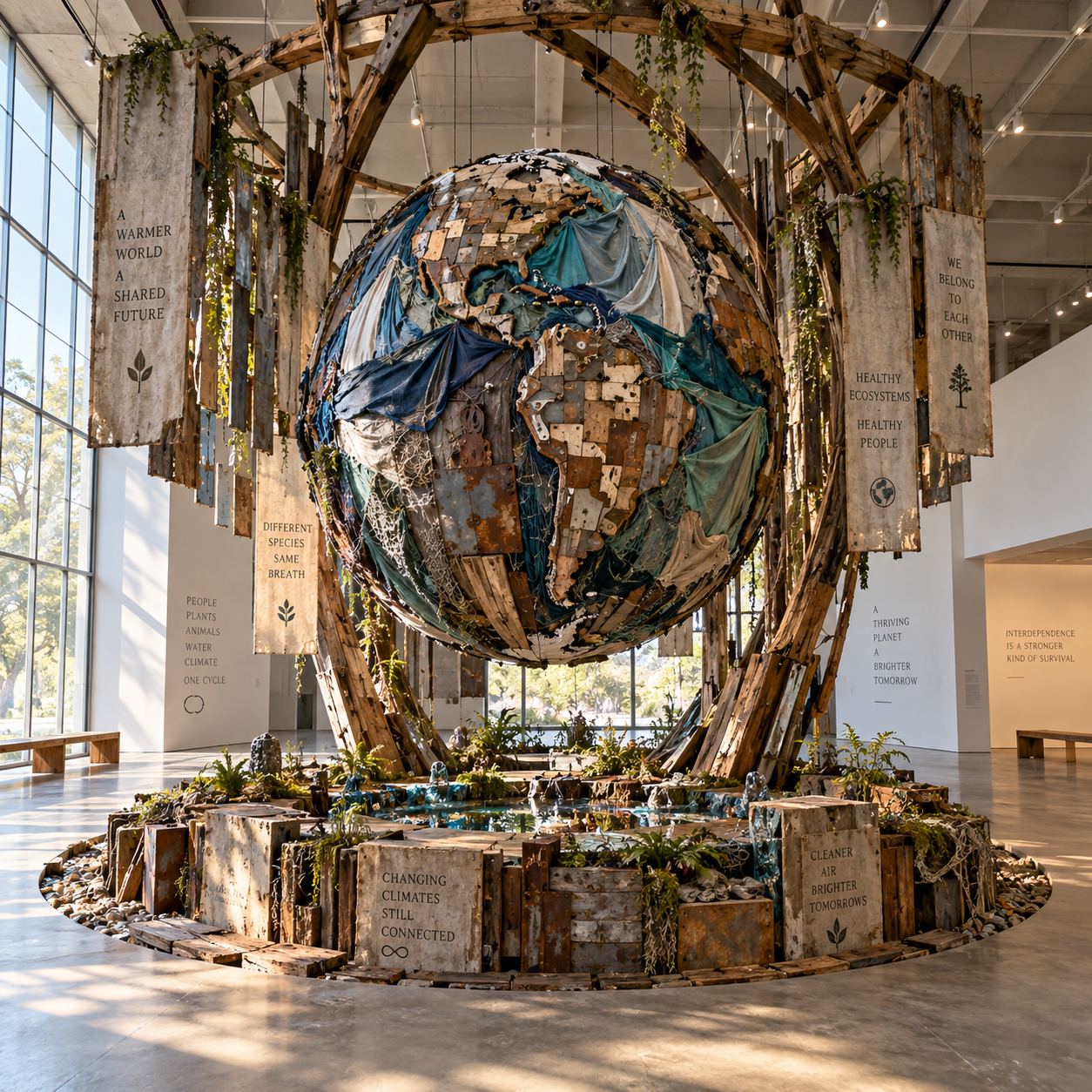
Contemporary artists are using sustainable design to reconsider how artworks are made, displayed, transported, and understood. Through eco-art, environmental art, circular design, and carefully chosen materials, they address climate change while questioning the systems of consumption that shape visual culture.
What Sustainable Design Means in Contemporary Art
Sustainable design in contemporary art means planning an artwork’s materials, production, exhibition, and afterlife with environmental impact in mind. It can involve lower-waste fabrication, responsible sourcing, reuse, repair, and a climate-focused concept, although these elements do not always appear together.
The term describes a relationship between idea and process. An artist may create a sculpture from reclaimed building materials because their previous use carries social meaning. Another may design a modular installation that can be dismantled and rebuilt for different exhibitions. A third may explore rising temperatures through conventional materials while reducing the work’s carbon footprint elsewhere.
This distinction matters. A work about climate change is not automatically a sustainable artwork, and recycled material is not automatically an environmentally responsible choice. Sustainable art practices require attention to the full chain of decisions: extraction, manufacturing, toxicity, energy use, transport, maintenance, conservation, and disposal.
In this context, circular design offers a useful framework. Instead of treating an artwork as a finished object with a fixed endpoint, circular thinking asks what can happen next. Can components be repaired, reused, loaned, repurposed, or returned to a material stream? The answer may influence the artwork’s form as much as its visual language.
Why Artists Are Responding to Climate Change
Artists respond to climate change by making distant environmental processes visible, sensory, and emotionally understandable. Contemporary art can create space for attention, ambiguity, and reflection where scientific information alone may feel abstract or overwhelming.
Climate change is experienced through altered landscapes, extreme weather, resource scarcity, displacement, and changes to everyday routines. Artists translate these conditions into images, objects, sounds, spaces, and participatory encounters. An installation might use accumulation to suggest rising waste, fragile materials to evoke ecological vulnerability, or a transformed site to reveal an overlooked relationship between a community and its environment.
Eco-art and environmental art often challenge the assumption that nature exists outside culture. They examine mining, agriculture, urban development, energy infrastructure, shipping, and consumer habits as connected systems. The artwork becomes a place to ask who benefits from these systems, who bears their consequences, and which forms of knowledge receive attention.
Artists also resist simple narratives of environmental purity. A work may expose the contradictions of contemporary life: a digital artwork depends on energy-intensive infrastructure; a biodegradable material may require industrial processing; a locally produced object may use a resource with hidden ecological costs. These tensions can become part of the work’s meaning rather than problems to conceal.
Art cannot replace climate policy, scientific research, or collective action. Its contribution lies elsewhere: it can shift perception, create public conversation, and make environmental responsibility feel connected to lived experience.
Materials and Methods Behind Sustainable Art
Sustainable art materials and methods reduce waste, extend useful life, and make environmental decisions visible. Artists may work with reclaimed materials, recycled components, renewable resources, repair techniques, or production systems designed for disassembly.
Reclaimed wood, salvaged metal, discarded packaging, used textiles, paper waste, agricultural by-products, and recovered plastics can carry both physical and cultural histories. Scratches, stains, previous labels, and signs of repair may remain visible. Rather than hiding imperfection, the artist can use it to show how objects move through economies of use.
Production choices are equally significant. An artist or studio might:
- Design components that can be separated without damaging them.
- Use mechanical fasteners instead of permanent adhesives where practical.
- Plan dimensions around available reclaimed stock to reduce offcuts.
- Repair or alter existing artworks rather than replacing them.
- Choose low-toxicity finishes and document material contents for future conservation.
- Source locally when doing so genuinely reduces transport or supports responsible suppliers.
These strategies involve trade-offs. Reclaimed materials may require cleaning, testing, or additional labor. Recycled plastics can still be difficult to recycle again when combined with other substances. Renewable materials may have seasonal, agricultural, or land-use implications. The right choice depends on the artwork’s purpose, expected lifespan, safety requirements, and future handling.
A useful studio question is: What is the smallest material intervention that can carry the largest artistic meaning? The answer may lead to a lighter structure, a modular format, or a work that invites audiences to notice absence rather than abundance.
From Objects to Installations: How Climate Ideas Shape Artworks
Installation art gives climate ideas physical form by placing audiences inside relationships among materials, space, time, and ecological change. Sculpture, mixed media, and site-specific work can communicate interdependence more directly than a self-contained object.
A site-specific installation may respond to a building’s history, a nearby waterway, local industry, or patterns of public movement. Its location is part of the artwork, so the work changes when it is moved. This can make questions of extraction, land, and belonging more immediate.
Scale also shapes interpretation. A dense field of small fragments can suggest accumulation and consumption. A nearly empty room may evoke depletion or loss. Repeated modules can resemble cells, seeds, shelters, or infrastructure. Materials become visual evidence: rust indicates exposure, repaired fabric records care, and compressed waste points to the volume of discarded goods hidden from view.
Time is another important medium. Some environmental artworks change through light, humidity, growth, decay, or audience participation. Such works complicate the museum expectation that an artwork should remain unchanged. Conservation then becomes a dialogue between preservation and transformation.
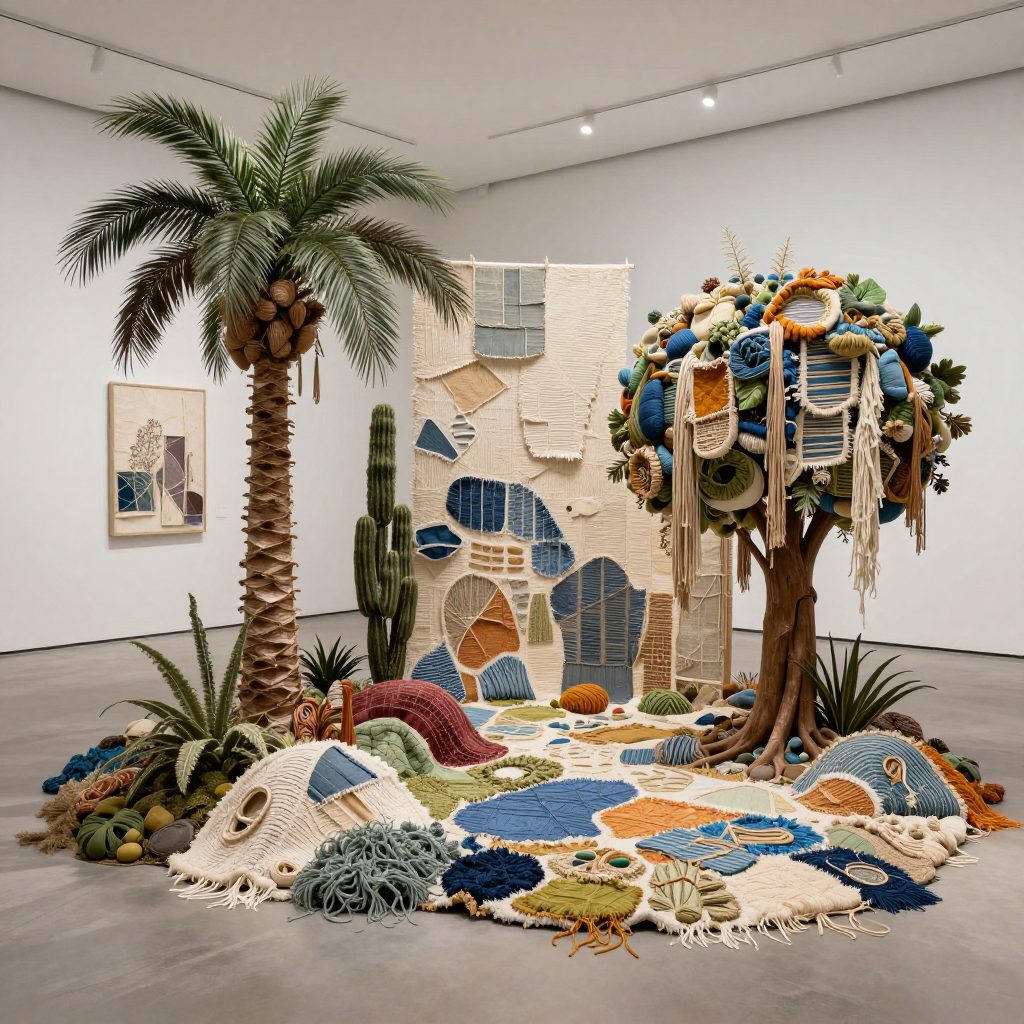
Exhibition design can reinforce these ideas. Reusable plinths, rented lighting, minimal construction, and adaptable display systems help reduce the environmental burden of an installation. Yet a visually restrained exhibition is not automatically sustainable; documentation of materials and logistics provides a more reliable basis for evaluation.
The Challenges of Making Art More Sustainable
Making art more sustainable requires managing competing demands rather than choosing one perfect material. Transportation, fabrication, energy use, preservation, exhibition construction, and audience access can all affect an artwork’s carbon footprint.
Transport is a common pressure point. A lightweight work may require less fuel to move, but fragile components can need protective packaging or climate-controlled conditions. Local fabrication can reduce shipping while increasing energy use if specialist equipment is inefficient. Digital documentation may reduce travel for some audiences, yet digital infrastructure also consumes energy.
Durability creates another tension. A long-lasting material may contain substances that are difficult to recover, while a compostable material may not survive repeated handling or exhibition. Conservation teams must also consider pests, humidity, light exposure, structural stability, and chemical interaction. A material that looks environmentally responsible at production may create serious preservation challenges later.
Common mistakes include:
- Using sustainability as a label. Why it happens: a recycled component sounds persuasive. Consequence: audiences receive an incomplete picture. Correction: explain the material’s origin, treatment, transport, and intended afterlife.
- Ignoring the exhibition lifecycle. Why it happens: attention stays on the artwork itself. Consequence: temporary walls, crates, signage, and single-use fittings create avoidable waste. Correction: plan installation and deinstallation before fabrication begins.
- Assuming local always means lower impact. Why it happens: distance is easy to measure. Consequence: energy, toxicity, or production methods remain invisible. Correction: assess the full supply chain rather than geography alone.
Transparent documentation is often more credible than an absolute claim. Artists and galleries can state what they measured, what they changed, and what remains unresolved.
The Role of Contemporary Art Galleries
Contemporary art galleries support sustainable practice by connecting curatorial choices with responsible production, exhibition design, and public education. Their influence extends beyond displaying finished works.
Curators can commission projects that use existing structures, specify adaptable installations, and allow artists time to test materials. Registrars, technicians, conservators, and fabricators should join these conversations early. A sustainable idea can fail if the gallery only considers its environmental requirements after the work has been completed.
Galleries can also reduce impact through practical systems:
- Reuse crates, walls, plinths, lighting equipment, and signage where possible.
- Coordinate shipments and avoid unnecessary rush transport.
- Record material inventories and care requirements for future exhibitions.
- Offer accessible digital interpretation without presenting it as a replacement for the physical work.
- Explain environmental decisions in wall texts, catalogues, and artist conversations.
Communication should avoid greenwashing. If an exhibition uses reclaimed materials but requires complex international transport, audiences deserve a nuanced account. A gallery builds trust by describing both progress and limits, linking artistic intention to specific choices rather than relying on broad environmental language.
Education can deepen the experience. A material glossary, studio conversation, repair demonstration, or exhibition walkthrough can help visitors understand why a work looks the way it does. The gallery becomes a place where climate-conscious art is interpreted, questioned, and connected to wider cultural practice.
How Audiences Can Engage with Climate-Conscious Art
Audiences can engage with climate-conscious art by examining its materials, process, context, and afterlife rather than judging sustainability from appearance alone. Looking closely turns viewing into a form of informed participation.
Ask four questions while encountering an artwork:
- What is it made from? Look for reclaimed, recycled, renewable, synthetic, or mixed materials.
- How was it made? Consider labor, energy, fabrication, repair, and whether the work was designed for disassembly.
- Where does it belong? Site, transport, installation conditions, and local relationships may shape its meaning.
- What happens next? Can it be maintained, reused, remade, archived, or responsibly deconstructed?
Visitors can support galleries that publish clear information about exhibition production and artists who discuss their methods with precision. When collecting art, ask about care requirements, packaging, transport, and future repair. These questions do not reduce art to an environmental score; they reveal the decisions that make the work meaningful.
Climate-conscious art is often most powerful when it leaves room for uncertainty. It may not provide a solution, but it can change what audiences notice: the life of a material, the energy behind an object, or the ecological relationships hidden in an ordinary room.
Frequently Asked Questions
What is sustainable design in contemporary art?
Sustainable design in contemporary art considers environmental impact across materials, production, exhibition, transport, maintenance, and disposal. It may include reclaimed materials, circular design, low-waste fabrication, repair, or a climate-related concept.
What materials do environmentally conscious artists use?
Artists may use reclaimed wood, recycled textiles, salvaged metal, reused packaging, recovered plastics, paper waste, renewable fibers, or locally available materials. Each requires context because environmental impact depends on processing, durability, transport, and future reuse.
How can art address climate change without becoming purely instructional?
Art can address climate change through atmosphere, metaphor, sensory experience, ambiguity, and material transformation. It invites audiences to feel and question ecological relationships rather than simply delivering a lesson.
How can galleries reduce the environmental impact of exhibitions?
Galleries can reuse display systems, coordinate transport, reduce temporary construction, document materials, choose efficient equipment, and involve artists, technicians, registrars, and conservators in planning from the beginning.
Is recycled material automatically sustainable?
No. Recycled material may still require energy-intensive processing, contain mixed substances, travel long distances, or be difficult to recycle again. Its sustainability depends on the complete material and exhibition lifecycle.
Sustainable design gives contemporary art a way to examine climate change through both subject and method. When artists, galleries, and audiences pay attention to material histories and future possibilities, environmental awareness becomes part of how art is made, encountered, and cared for.