Virtual Reality as a New Canvas: How Artists Are Pushing Digital Boundaries
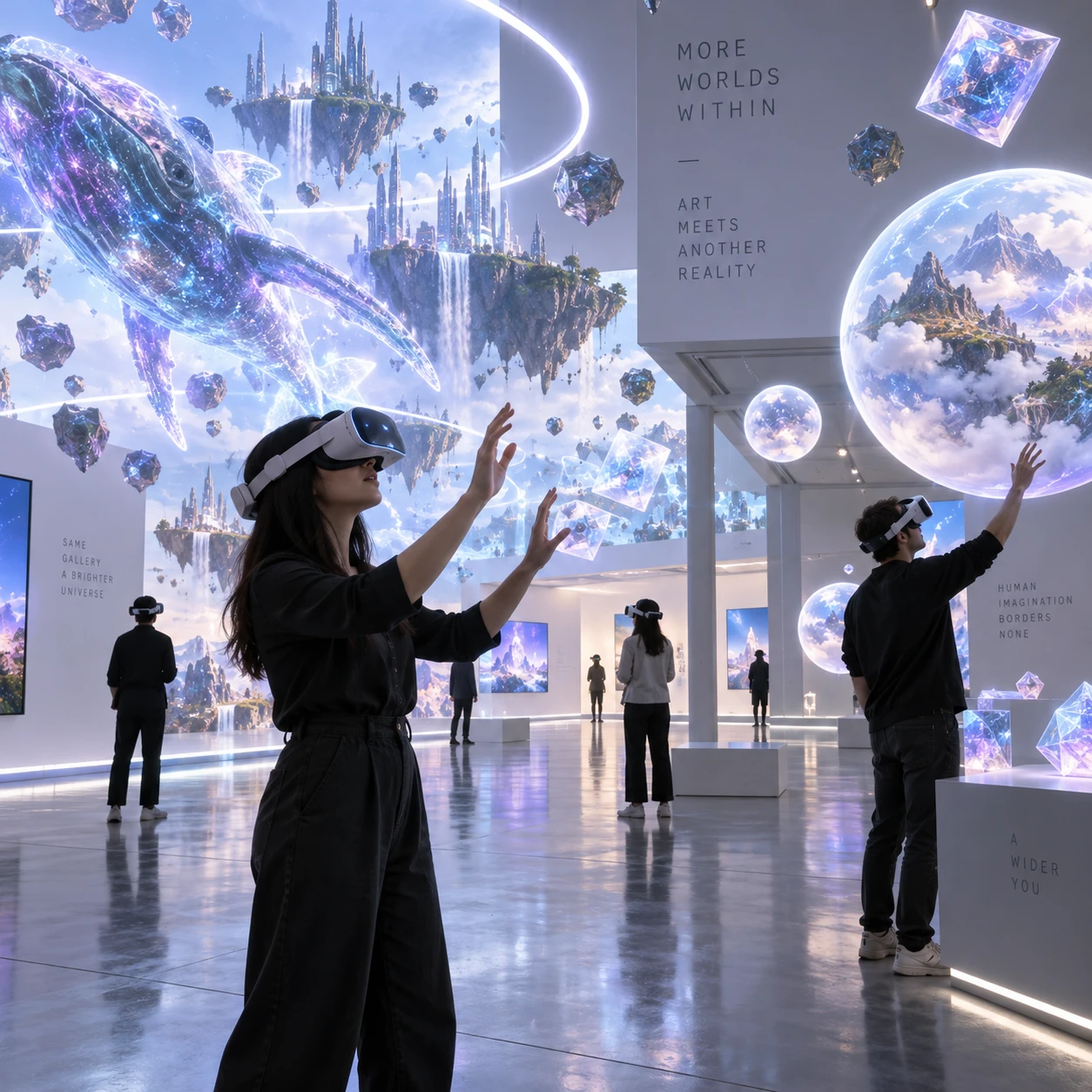
In virtual reality, an artwork can surround you. A painted image or sculpture usually occupies a defined surface or space; a VR artwork can build an environment that viewers enter, explore and sometimes change. For contemporary artists, that shift opens up new ways to work with scale, movement and audience attention.
Virtual reality does not make physical art obsolete. It gives digital artists another medium, with its own materials, constraints and possibilities. The result can be intimate or monumental, quiet or interactive, and often asks viewers to notice how their own presence shapes an experience.
From physical canvas to virtual space
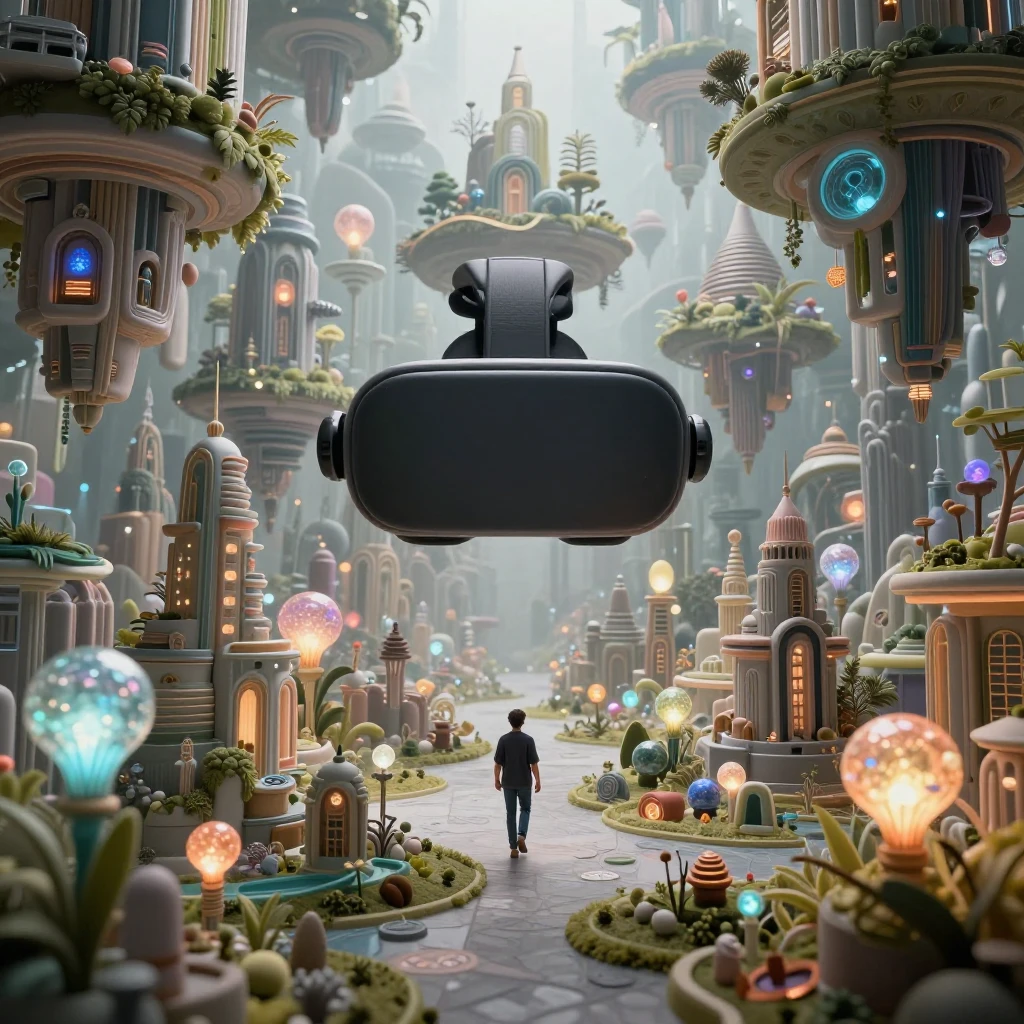
Virtual reality moves artmaking from a fixed surface into a space viewers can enter. Instead of looking at a scene from outside, a person wearing a VR headset can stand inside a constructed world and choose where to look.
This changes the artist’s job. A painter arranges marks within the edges of a canvas; a VR artist considers what appears ahead, behind, above and below the viewer. The work may have no single ideal viewpoint. A floating form might look delicate from one angle and monumental from another.
That freedom has a trade-off: artists have less control over what each viewer notices first. They can guide attention with light, sound, color or movement, but cannot frame every moment as precisely as a photograph or film. This makes composition less about a border and more about the relationship between the viewer and the whole environment.
Building worlds with digital tools
Artists create VR artworks by combining 3D modeling, spatial design and, when useful, interactive elements. These tools let them shape objects and environments that can be viewed from multiple angles and experienced at human scale.
A typical process might start with a sketch, a set of reference images or a question: what would it feel like to walk through a memory? The artist then builds forms in 3D software, arranges them in a virtual scene and tests how the space reads through a headset. Some artists work with developers or sound designers; others use accessible painting and sculpting tools made for virtual environments.
The key decisions are artistic, not merely technical. How far apart should objects sit? Does a room feel open or confining? Should a shape stay still, drift gently or respond to the viewer? These choices create spatial storytelling, where distance, scale and direction carry meaning alongside imagery.
Motion tracking helps connect the viewer’s body to the scene. As a person turns their head or moves their hands, the virtual view can respond. That responsiveness can feel direct and expressive, though it also makes testing essential: an interaction that seems intuitive to its maker may confuse a first-time visitor.
The viewer becomes part of the artwork
In interactive VR art, viewers influence the experience through movement, attention and choice. Their actions may change what they see, how they move through a space or which parts of the work reveal themselves.
Interactivity can be subtle. A work might respond only when someone approaches an object, or it might ask the viewer to pick up, rotate or place virtual forms. In other pieces, simply turning around changes the composition. The viewer’s body becomes part of the medium, even when there is no controller or explicit task.
This participation can create a stronger sense of discovery, but it does not automatically make a work more meaningful. If every object invites a button press, interaction can feel like a checklist. A useful question for artists is: what does the viewer’s action express or reveal? When movement has a clear purpose, it can deepen the work. When it does not, stillness may be the more powerful choice.
For audiences, the result can be personal and varied. Two people may follow different paths, spend time with different details or leave with distinct impressions. That openness is part of the form, though it can make group viewing and shared discussion more complicated.
New forms of storytelling and expression
VR gives artists new ways to tell stories through scale, perspective and environment. A virtual space can make a viewer feel small beside an enormous structure, or place them close to a fragile detail that would be difficult to encounter in a physical gallery.
Unlike a conventional narrative with one fixed viewpoint, spatial storytelling lets an audience assemble meaning by moving through a scene. An artist might use a narrow passage to create hesitation, a sudden change in scale to unsettle the viewer, or a distant sound to draw attention toward an unseen area. The environment itself becomes a kind of language.
VR can also make abstract ideas tangible. A work about memory might scatter images that shift as the viewer moves; a piece about isolation could place a lone figure in a vast, silent landscape. These are artistic strategies, not guaranteed effects. A virtual environment can suggest a feeling, but each viewer brings their own associations and may respond differently.
Bringing VR art into galleries
A gallery can present VR art alongside painting, sculpture, video and other contemporary art, but it needs to plan for the headset experience. Exhibition design must account for the virtual work as well as the people waiting, watching and taking turns.
Headsets usually make the artwork visible to one wearer at a time, so galleries can add a screen that mirrors the view for other visitors. Clear instructions, staff support and enough space to move safely help people feel at ease. A chair or seated mode can also make an experience more accessible and comfortable.
Digital exhibitions raise practical questions about duration, equipment and preservation. Headsets need cleaning between users, software may require updates, and a work built for one device may need adaptation for another. The gallery should explain how long the experience takes and whether it includes movement, sound or interaction, so visitors can make an informed choice.
These considerations do not make VR less suitable for a gallery. They shape how the work is encountered. A VR installation can be presented as a distinct environment, while its mirrored image, instructions or related physical materials give other visitors ways to engage with it too.
Possibilities and limits of the medium
VR offers artists control over an entire environment, but access, comfort and technical requirements limit who can experience the work and how. The medium works best when its immersive qualities serve the artistic idea.
For some viewers, wearing a headset can cause discomfort, disorientation or fatigue. Others may not be able to use a particular device because of mobility, vision or balance needs. Galleries can offer seated experiences, shorter sessions, alternative viewing formats and clear information, but no single setup will suit everyone.
There are also production and preservation challenges. Creating a polished 3D environment can take time and collaboration, and interactive works may depend on specific hardware or software. Artists and institutions should consider how a piece might be documented, maintained or adapted if its original equipment becomes unavailable.
A common mistake is treating immersion as an artistic goal in itself. A headset can surround a viewer without giving them a reason to care about the space. Another is assuming that more interactivity always improves a work. A simpler environment, or one that works through observation rather than action, may communicate more clearly.
The practical test is straightforward: does VR make an experience possible that would be difficult to create in another medium? If so, the technology has a clear role. If not, the artist may be better served by a physical installation, film or image.
What the new canvas makes possible
Virtual reality expands contemporary art by letting artists build spaces that audiences can enter and explore. Its value lies in the relationship among the environment, the viewer’s body and the choices the artist makes.
For digital artists, VR is a medium with room for experimentation, but also with real demands: thoughtful spatial design, careful testing, accessible presentation and plans for changing technology. For galleries, it offers a way to show immersive art while asking how a work can be shared when each visitor experiences it individually.
The most compelling VR artworks do not need to imitate a physical gallery or prove that technology is new. They use virtual space because it helps them think differently about presence, perspective and participation. That makes the headset less a spectacle than a doorway into another kind of artistic encounter.