The Rise of Immersive Art Installations: Beyond the Gallery Wall
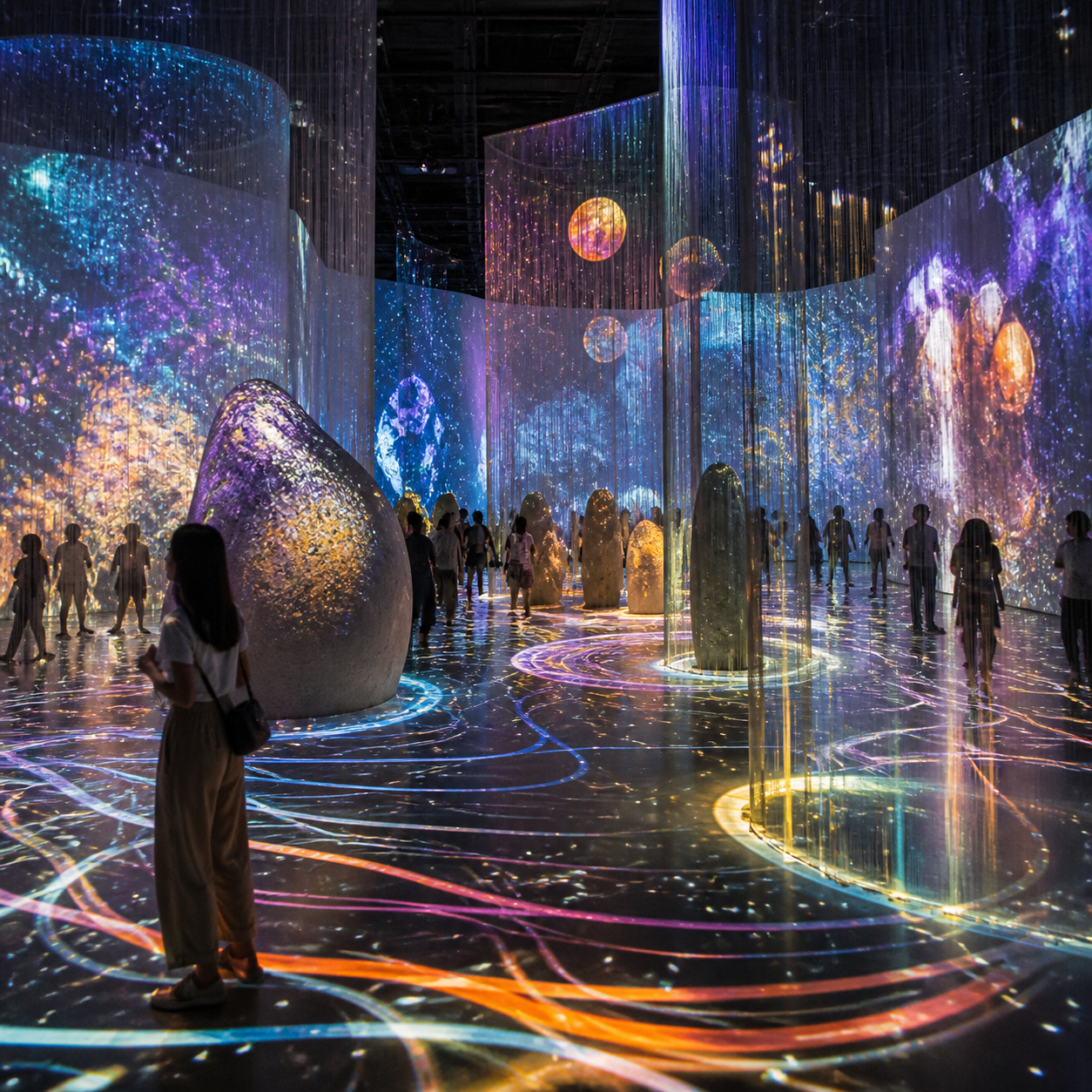
Contemporary art is increasingly asking audiences to do more than look. In immersive art installations, the artwork may surround the visitor, respond to movement, unfold through sound, or transform an entire room into a changing visual environment. The result is a gallery experience shaped by space, time, and participation as much as by objects.
This movement does not make the traditional gallery wall irrelevant. Instead, it expands the possibilities of exhibition-making. Painting, sculpture, digital art, architecture, performance, and interactive technology can now meet within a single spatial composition, giving artists and curators new ways to explore perception, memory, identity, and place.
What Are Immersive Art Installations?
Immersive art installations are artworks designed to surround or actively involve the audience through space, sensory elements, and participation. Unlike conventional wall-based exhibitions, they make the visitor’s physical presence part of how the work is experienced.
An installation can occupy a room, building, landscape, or temporary public site. Its materials might include fabric, found objects, architecture, light, video, sound, scent, or digital interfaces. Immersion does not require every sense or the latest equipment. It means that the artwork’s meaning depends substantially on how a person enters, moves through, and responds to the environment.
Traditional exhibition formats often establish a clear relationship: the viewer stands before an object, while the object remains materially fixed. Installation-based work complicates that arrangement. A doorway may become part of the composition; shadows may change as people walk; a soundscape may guide attention from one area to another.
The distinction is useful, but it is not absolute. A painting can create an immersive psychological experience, and an installation can contain discrete objects for close observation. The difference lies in the work’s primary structure: immersion treats the surrounding environment and the audience’s movement as artistic variables.
From Viewing Art to Entering the Artwork
Immersive art shifts the audience from distant observation to embodied experience by using scale, sound, light, movement, and spatial design. Visitors do not simply receive an image; they navigate a situation whose atmosphere develops through their presence.
Scale is often the first transformation. A projected image that would appear flat on a monitor can become enveloping when it covers walls, floors, and ceilings. A narrow passage can create intimacy or tension, while an open room can produce wonder, disorientation, or a sense of collective space.
Sound gives the environment another dimension. Directional audio can draw attention toward a particular point, while a low-frequency vibration may make the space feel unstable. Silence can be equally deliberate. When a work leaves room for footsteps, breathing, or conversation, it makes the visitor newly aware of being inside the composition.
Movement also carries meaning. Some installations ask visitors to choose a route, wait for a visual change, or approach an object closely. Others respond to gestures and create different outcomes for different groups. This is where audience participation becomes more than a novelty: the visitor’s behavior helps determine the work’s rhythm and sometimes its content.
Spatial storytelling can therefore operate without a conventional beginning, middle, and end. A sequence of rooms, changing light states, or recurring sounds can suggest a narrative while leaving interpretation open. The audience becomes a participant in assembling meaning rather than a reader following a single prescribed explanation.
The Technologies Shaping Immersive Contemporary Art
Projection mapping, sensors, digital media, and responsive systems shape many immersive installations, but technology works best when it serves the artistic concept. Equipment can extend an idea; it cannot supply one by itself.
Projection mapping aligns moving images with architectural surfaces, including irregular walls, sculptures, floors, and façades. This technique can make a solid structure appear to dissolve, grow, fracture, or shift in scale. Large-format video and generative graphics create environments that change over time rather than presenting a single fixed image.
Sensors and cameras allow an installation to detect proximity, sound, touch, or movement. A visitor might trigger a sound layer by entering a zone, alter projected patterns with a hand gesture, or contribute data to a continuously evolving image. These systems create responsive environments, although their responsiveness should remain legible and purposeful.
Other works use virtual reality, augmented reality, spatial audio, robotics, or networked devices. Digital tools can connect a physical gallery to remote participants or overlay imagined histories onto an existing site. Yet technical complexity introduces practical demands: calibration, software maintenance, power management, cybersecurity, and staff training.
The strongest curatorial approach begins with questions rather than hardware. What should the visitor notice? Which relationship should change through interaction? Does a sensor deepen the work’s argument, or merely reward movement with a visual effect? These questions protect immersive contemporary art from becoming a demonstration of equipment.
Why Audiences Are Drawn to Immersive Experiences
Audiences are drawn to immersive experiences because they combine emotional atmosphere, physical discovery, and personal interpretation. Participation can make an artwork feel immediate, memorable, and shared without reducing it to entertainment.
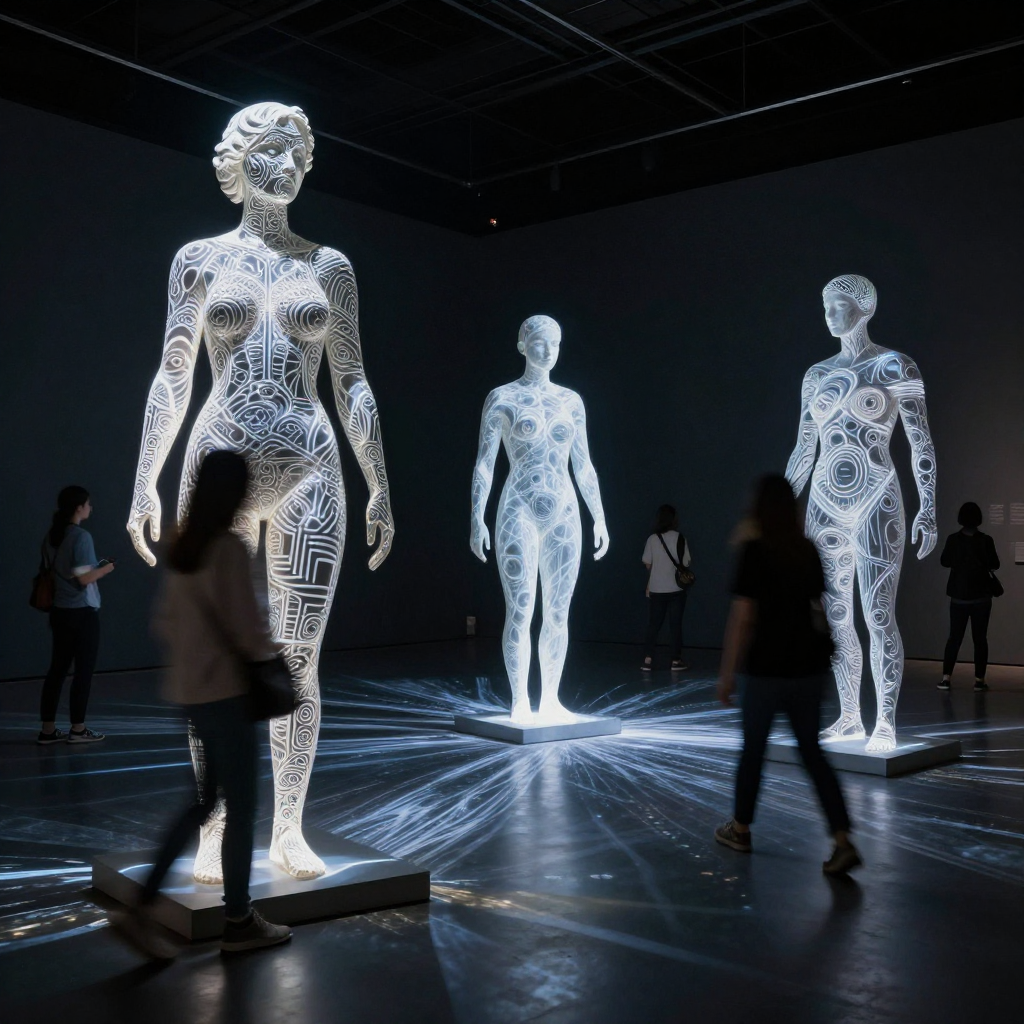
Immersive environments often create a stronger sense of presence than a single image viewed at a distance. Light may alter the perceived size of a room; a sound may recall a familiar place; a changing surface may encourage visitors to stay longer and observe gradual differences. These sensory cues give abstract ideas a physical form.
The format also accommodates different ways of paying attention. One visitor may focus on color and composition, another on the system behind the interaction, and another on the emotional response produced by darkness, repetition, or enclosure. There is no requirement that every participant experience the same work in precisely the same way.
Social behavior matters, too. People negotiate space, watch others interact, and sometimes become visible within the artwork themselves. A room that responds to collective movement can turn spectators into a temporary community. That social layer can be powerful, though it may also create discomfort for visitors who prefer privacy or have sensory sensitivities.
Accessibility must therefore shape the experience from the start. Adjustable sound levels, clear routes, seating, tactile alternatives, captions, audio description, and advance information about flashing lights can make participation more equitable. Immersion should widen access to contemporary art, not demand a single physical or sensory mode of engagement.
The Role of Artists, Curators, and Contemporary Galleries
Artists establish the conceptual and sensory language of an installation, while curators and galleries shape the conditions in which audiences encounter it. Meaning emerges through the relationship between creative intent, exhibition space, interpretation, and audience flow.
Artists may design the work as a complete environment, or they may create a flexible system that changes according to its site. In both cases, spatial decisions are part of the practice. The height of a screen, the route through a room, the position of a speaker, and the timing of a transition can affect interpretation as directly as color or material.
Curatorial practice provides the framework around that experience. A curator decides how the work relates to neighboring pieces, whether explanatory text is necessary, how long visitors might need inside it, and where the experience begins and ends. In an immersive exhibition, sequence and pacing become curatorial tools.
Contemporary galleries also have to manage audience flow. A popular installation can produce queues, blocked entrances, or uneven viewing times. Thoughtful planning may involve timed entry, quiet sessions, multiple access routes, or a decompression area after a particularly intense work.
The gallery’s physical architecture remains influential even when the installation appears digital. Ceiling height affects projection; natural light changes color; acoustics shape sound; fire regulations and conservation requirements limit materials. Good collaboration among artist, curator, technician, registrar, and educator turns these constraints into part of the work’s responsible presentation.
Opportunities and Challenges Beyond the Gallery Wall
Immersive installations offer broader participation and fresh forms of artistic expression, but they also raise difficult questions about accessibility, preservation, documentation, and spectacle. Their success depends on balancing sensory impact with durable artistic substance.
One opportunity is expanded engagement. An installation can welcome people who feel uncertain about entering a traditional gallery, especially when it offers multiple points of entry through sound, movement, or shared activity. It can also connect contemporary art with architecture, science, education, and public space.
Preservation is more complicated. A painting can often be conserved as a physical object, while an interactive installation may depend on obsolete software, aging projectors, fragile sensors, or a specific room. Conservators may need to preserve the original equipment, document the system, emulate outdated software, or record the artist’s instructions for future reinstallation.
Documentation presents a similar problem. Photographs and video can show appearance, but they rarely capture the full bodily experience of moving through a work. Detailed floor plans, technical diagrams, visitor pathways, sound files, and artist interviews can provide a more useful record.
Commercial pressure is another concern. Immersive exhibitions are highly shareable, which can encourage institutions to prioritize photogenic moments. When social-media visibility becomes the main measure of success, slower or less spectacular works may receive less attention. The correction is not to reject visual appeal, but to ask whether the image leads audiences toward the work’s ideas.
- Mistake: Treating technology as the concept. Correction: Define the artistic question before selecting the system.
- Mistake: Assuming participation automatically creates meaning. Correction: Design interactions with clear consequences, limits, or interpretive purpose.
- Mistake: Planning accessibility after installation. Correction: Include access needs in spatial, technical, and curatorial decisions from the beginning.
The Future of Immersive Art Installations
The future of immersive art installations will combine physical space, digital media, and participation while placing greater emphasis on accessibility, sustainability, preservation, and artistic intention. Galleries are likely to treat immersion as one exhibition strategy among many rather than as a universal replacement for object-based art.
Artists may use lighter equipment, real-time software, environmental data, and low-energy projection systems to create responsive works with a smaller material footprint. Others may return to analogue methods such as mirrors, fabric, mechanical movement, scent, or live performance. Immersive art does not depend on technological escalation.
Galleries can also develop more adaptable spaces: rooms with flexible acoustics, controllable lighting, robust power infrastructure, and clear visitor pathways. Digital interpretation may extend an installation beyond its physical run, while careful documentation can preserve the experience without pretending that a recording is identical to being there.
The most valuable question for future curatorial practice is simple: what does immersion make possible that another format cannot? Sometimes the answer will involve collective memory, embodied perception, or a new relationship with architecture. Sometimes a wall, a single object, or a quiet room will communicate more precisely.
Immersive art installations are changing the gallery experience because they make space, duration, and participation central to contemporary art. Their lasting influence will depend less on novelty than on the quality of the questions they invite audiences to inhabit.
Frequently Asked Questions About Immersive Art
What makes an art installation immersive?
An art installation becomes immersive when the surrounding environment and the visitor’s physical presence play a meaningful role in the work. Scale, sound, light, movement, material, and interaction may all contribute.
How is immersive art different from digital art?
Digital art uses digital tools or processes, while immersive art describes a mode of audience experience. A digital artwork can appear on a screen without being immersive, and an immersive installation can be made entirely with physical materials.
What technologies are used in immersive installations?
Common technologies include projection mapping, video, spatial audio, motion sensors, cameras, touch interfaces, augmented reality, virtual reality, robotics, and generative software. The appropriate choice depends on the artistic purpose.
Why are immersive exhibitions important to contemporary art?
Immersive exhibitions expand how artists address perception, space, participation, and social interaction. They also encourage galleries to rethink interpretation, accessibility, conservation, and the relationship between artwork and audience.
Can immersive art exist without advanced technology?
Yes. Darkness, architecture, fabric, mirrors, scent, live performance, sound, changing light, and carefully arranged objects can produce immersion without digital equipment. Technology is one possible method, not the definition of the form.